The biggest story in advertising right now isn’t about one platform or one trend. It’s that the media landscape is fragmenting faster than ever, and the winners are the ones who stop chasing cheap reach and start building real strategy.
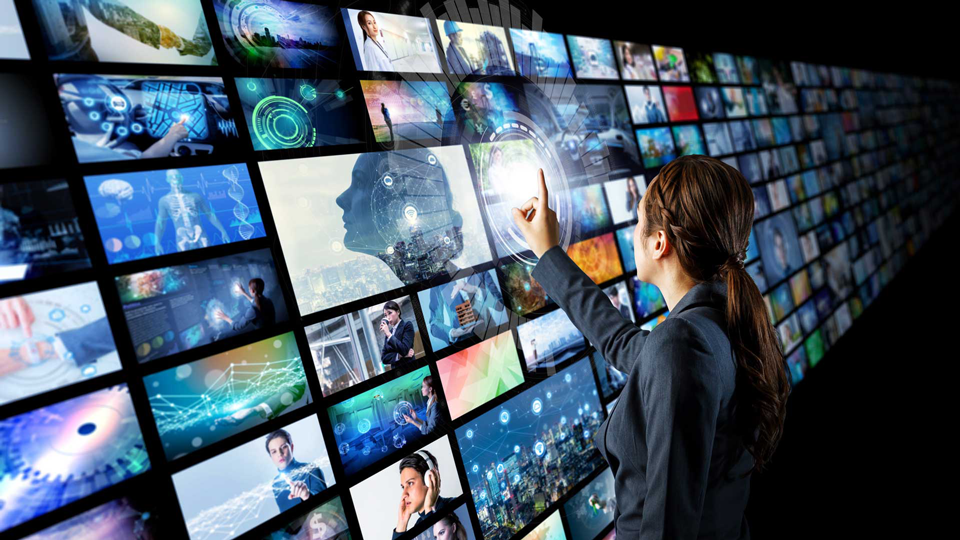
Smart TV, streaming audio, digital billboards, connected TV, radio reimagined… your audience is everywhere now. But they’re not everywhere equally. The brands winning in 2026 are matching the right message to the right moment on the right medium. Everyone else is just burning money.
Here’s what’s actually happening with the media your competitors are buying.
Smart TV Home Screens: The New Premium Frontier
Before someone presses play on their TV, they’re standing at a decision point. That home screen moment—when they’re leaned in, scrolling, deciding what to watch—is one of the most valuable ad placements in media right now.
Smart TV ownership is nearing 70% among affluent households, and the industry has discovered something powerful: that moment before play is when intent is highest. Samsung and other TV makers just made it easier for smaller businesses to buy ads at that moment, without the traditional gatekeepers.
These placements command premium prices for a reason. BAM leverages our buying power, media smarts and connections to get more ads for you for less money. You’re reaching high-intent audiences at the exact moment they’re ready to decide.
Connected TV Is Now Bigger Than Linear TV
Connected TV (CTV) advertising is about to surpass traditional linear TV in prime-time spending. For the first time ever.
Here’s the money moving: CTV ad spend is rising from $33 billion in 2025 to almost $52 billion by 2029. That’s not hype. That’s where dollars are actually going.
Why the shift? Digital precision. Performance measurement. The ability to optimize on the fly. Linear TV gives you reach. CTV gives you reach plus measurability. We are choosing measurability.
Radio Never Left—It Just Evolved
People think radio is dead. It’s not. Radio is a $12.5 billion advertising channel, and it’s more sophisticated now than ever.
I place media buys on radio stations for clients, and here’s what’s changed: those same stations are now reaching audiences through streaming audio, podcasts, and targeted digital ads. They’re still hitting people during commutes and drive times—radio’s superpower—but now they’re doing it with digital precision targeting.
The stations winning are the ones who understood this evolution first.
Digital Billboards Got Smart
Billboards used to be static. You picked a location, showed the same ad for weeks, and hoped it worked.
Now? They’re digital activation engines.
Event-driven creative. Weather-triggered messaging. Audience density optimization. Time-of-day personalization. Real-time adaptation.
The best example: DoorDash’s “Deliver Us To Fútbol” campaign during FIFA World Cup 2026. They transformed their digital billboards in NYC, LA, and Miami into live scoreboards showing all 104 match scores throughout the tournament. The billboard’s message only became relevant when a game was live. That’s when audience intent was highest. That’s smart activation.
Last winter, we served up weather-reporting billboards that alerted drivers of weather conditions. The purpose was to help drivers stay safe on the road. For a Subaru dealer. The weather message and the Subaru dealer’s message was synergistic… be prepared for whatever Mother Nature throws your way.
Campaigns with contextually relevant messaging are 17% more effective at driving audience response. That’s not accidental. That’s strategy.
Podcast Sponsorships Exploded
Podcast advertising hit a ceiling, then broke through it.
One of the growth drivers? Host-read ads. When the podcaster you listen to—the person you trust—actually talks about a product, listeners pay attention. These sponsorships command premium prices because they work. Projected to reach $44 billion in 2026, up from $37 billion in 2025.
That’s a 19% jump in a single year. Advertisers aren’t throwing money at podcasts randomly. They’re following engaged, loyal audiences.
YouTube Faces Real Competition for the First Time
43% of YouTube budgets are now moving to TV screens (up from 24% in just two years). TikTok’s advertising revenue is projected to surpass YouTube’s by 2028.
This isn’t YouTube dying. It’s the video landscape splintering. YouTube Shorts drives discovery. TikTok drives commerce. Each platform owns a different piece of the funnel.
Multi-platform video strategies aren’t optional anymore. They’re the baseline.
The Attention Crisis Is Real (And It Favors Better Creative)
More ads are shown than ever. Fewer clicks happen than ever. The gap between ad volume and engagement is the real story.
Creative quality and targeting precision together explain 60% of advertising success. The other 40%? That’s noise.
The winning formula today: ads that stop the scroll or grab the eye or ear because they’re relevant, creative that works on mute, messages that feel like part of the experience instead of an interruption. Cheap reach is dead. Relevant reach is everything.
What This Means for Your Business
Here’s the unfiltered truth: Better creative + better targeting + right moment = better results. Everything else is noise.
You can buy cheap reach on any platform. But cheap reach doesn’t move the needle. You get what you pay for.
The media landscape in the final months of 2026 rewards precision, authenticity, and strategy. Whether you’re advertising on smart TV home screens, streaming television, radio, digital billboards, podcasts, or video platforms, the winners match their message to the medium and resist the pressure to buy volume.
Your competitors are still chasing cheap reach. You don’t have to be.
Questions about where your media budget should go? Let’s talk strategy. Reach out, and we can map where your audience actually is and how to reach them when it matters most.